Basic Hand Tools for Beginners: Where to Start

Starting your first toolbox can feel confusing. Walk into any hardware store and you will find hundreds of tools in different sizes, styles, and price ranges. The good news is that beginners do not need everything at once. A small collection of basic hand tools can handle many everyday repairs, maintenance jobs, and simple DIY projects.
Hand tools are useful because they are easy to carry, simple to learn, and do not usually require electricity or batteries. Whether you want to tighten a loose cabinet handle, hang a picture, assemble furniture, or make small repairs around the house, having the right tools nearby can save time and effort.
This guide covers the essential tools beginners should consider and explains what each one is commonly used for.
What Are Basic Hand Tools?
Basic hand tools are tools that you operate manually rather than with electricity, batteries, or another power source. They are commonly used for tightening, cutting, gripping, measuring, striking, and fastening.
Some familiar examples include:
Hammers
Screwdrivers
Pliers
Wrenches
Tape measures
Utility knives
Hex keys
Levels
You do not need to be an experienced DIYer to use these tools. Learning a few basic skills can prepare you for many small jobs around your home, garage, or workshop.
Why Should Beginners Own Basic Hand Tools?
Small repair jobs happen regularly. A screw becomes loose, a shelf needs adjusting, a package needs opening, or a piece of furniture needs assembling.
Without the right tool, even a simple task can become frustrating.
Having a set of basic hand tools gives you the ability to deal with common jobs when they appear. Instead of searching for something that might work as a substitute, you can use a tool designed for the task.
Building your own toolbox also gives you a chance to learn useful DIY skills gradually. Start with simple jobs and add new tools as your projects become more advanced.
1. Claw Hammer
A claw hammer is one of the most recognizable tools in any toolbox. One side of the head is designed for driving nails, while the curved claw on the other side can help remove them.
A hammer is useful for:
Hanging pictures
Small woodworking projects
Removing nails
Repairing wooden items
General household maintenance
Beginners should look for a hammer that feels comfortable and balanced in the hand. A tool that is too heavy may be difficult to control during smaller jobs.
2. Screwdriver Set
Screws are found throughout the home, from furniture and cabinets to appliances and door hardware. That makes screwdrivers some of the most important basic hand tools to keep available.
The two common screwdriver types are Phillips and flathead.
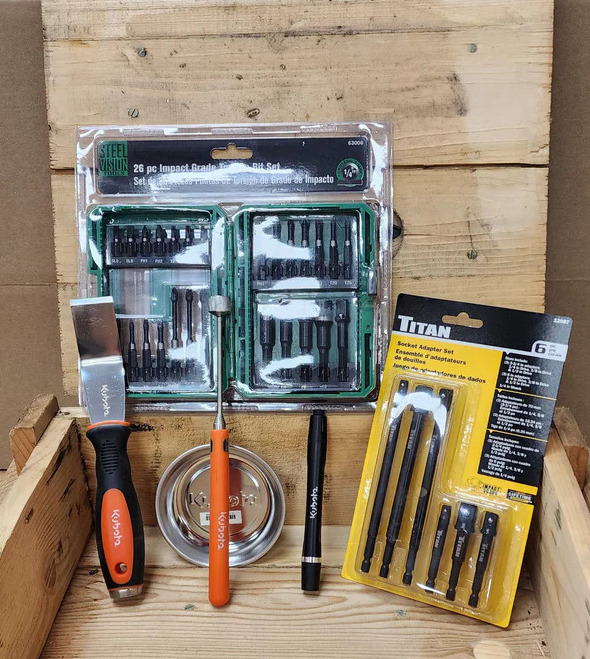
A screwdriver set with several sizes can help you work with different screws. Some sets also include interchangeable bits, which can reduce the number of separate tools you need to store.
Screwdrivers are commonly used for assembling furniture, tightening handles, adjusting fixtures, and completing basic repairs.
3. Tape Measure
Good DIY work often starts with accurate measurements.
A tape measure can help you determine whether furniture will fit in a space, position wall decorations, measure materials, or plan a simple home project.
A 16-foot or 25-foot tape measure is usually enough for everyday household jobs.
When measuring, check your numbers twice before cutting, drilling, or making permanent changes. This simple habit can help prevent wasted materials and unnecessary mistakes.
4. Pliers
Pliers help you grip, bend, twist, and sometimes cut different materials.
There are several types available, but beginners can start with a few common options.
Slip-joint pliers are useful for general gripping tasks.
Needle-nose pliers have long, narrow jaws that can reach into tight areas.
Diagonal cutting pliers are designed for cutting wire and similar materials.
A small selection of pliers makes your toolbox much more versatile.
5. Adjustable Wrench
An adjustable wrench is useful when working with nuts and bolts. Instead of carrying multiple fixed-size wrenches, you can adjust the jaw to fit different fasteners within its range.
You might use one when assembling furniture, tightening hardware, working on a bicycle, or performing minor household maintenance.
Make sure the wrench fits the fastener securely before applying pressure. A loose fit can slip and potentially damage the fastener.
6. Utility Knife
A utility knife is a simple tool with many practical uses.
It can help with:
Opening boxes
Cutting cardboard
Trimming materials
Cutting tape
Scoring certain materials
Many utility knives use replaceable or retractable blades. Retractable designs are particularly convenient because the blade can be stored inside the handle when the tool is not being used.
Always cut away from your body and retract or cover the blade immediately after use.
7. Hex Key Set
If you have ever assembled flat-pack furniture, you have probably used a hex key.
Also called Allen keys, these small L-shaped tools are designed for fasteners with hexagonal sockets. They are commonly found in furniture, bicycles, exercise equipment, and various household products.
Hex keys are inexpensive and take up very little space, so keeping a complete set in your toolbox can be helpful.
8. Level
A level helps you check whether something is horizontally or vertically straight.
It is especially useful when installing:
Shelves
Picture frames
Mirrors
Cabinets
Wall-mounted decorations
A small spirit level is enough for many beginner projects. Using one can make finished work look cleaner and more professional.
9. Combination Wrench Set
An adjustable wrench is versatile, but a set of combination wrenches can provide a more secure fit when working with specific nut and bolt sizes.
Combination wrenches typically have an open end on one side and a closed ring end on the other.
If you regularly work on bicycles, furniture, lawn equipment, or mechanical projects, a wrench set can be a useful addition to your growing collection of basic hand tools.
10. Small Handsaw
A handsaw is helpful when you need to cut wood without using a power tool.
Beginners can use a basic handsaw for simple woodworking, trimming small pieces of lumber, or completing repairs around the house.
Before cutting, secure the material properly and mark your cutting line clearly. Start slowly until the saw creates a stable groove, then continue using smooth strokes.
How to Choose Your First Hand Tools
You do not have to buy every tool immediately. Think about the jobs you are most likely to perform.
For general household use, you might start with a hammer, screwdriver set, tape measure, pliers, adjustable wrench, utility knife, and level. These tools cover a wide range of common tasks.
When shopping, consider comfort as well as price. Handles should feel secure in your hand, moving parts should operate smoothly, and the tool should feel sturdy enough for its intended purpose.
A smaller collection of reliable tools is often more useful than a large box filled with tools you rarely need.
How to Organize Basic Hand Tools
Once you start collecting tools, keeping them organized becomes important.
A toolbox or tool bag is a simple solution for beginners. Keep frequently used items where they are easy to reach and smaller accessories in separate compartments.
After using your tools, return them to the same place. This makes it easier to find what you need the next time a repair comes up.
You should also keep tools clean and dry. Moisture can cause rust on metal surfaces, while dirt and debris can affect moving parts.
Basic Safety Tips for Using Hand Tools
Even simple hand tools should be used carefully.
Before beginning a project, inspect the tool for damage. Do not use tools with cracked handles, loose heads, damaged blades, or badly worn surfaces.
Wear appropriate eye protection when there is a chance of flying debris. Gloves may also be useful for certain jobs, although they should not interfere with your grip or control.
Most importantly, use each tool for its intended purpose. A screwdriver should not replace a pry bar, and a wrench should not be used as a hammer.
Using the correct tool generally makes the job easier and safer.
Build Your Toolbox One Project at a Time
You do not need a professional workshop to start doing basic DIY work.
Begin with the tools needed for the projects you actually plan to complete. If you are assembling furniture, screwdrivers and hex keys may be your first priority. If you are hanging shelves, you might need a tape measure, level, screwdriver, and hammer.
As you take on different projects, you will naturally discover which additional tools are worth adding.
This approach keeps your collection practical and prevents you from spending money on equipment you may never use.
FAQs About Basic Hand Tools
What are the most important basic hand tools for beginners?
A good beginner collection usually includes a hammer, screwdriver set, tape measure, pliers, adjustable wrench, utility knife, level, and hex key set. These tools can handle many common household and DIY tasks.
How many hand tools does a beginner need?
There is no fixed number. Beginners should start with a small collection that matches the jobs they expect to perform. Additional tools can be added when new projects require them.
Are hand tools better than power tools for beginners?
Both have their place. Hand tools are often easier for beginners to learn because they offer more direct control and usually require less setup. Power tools become useful when projects require more speed, force, or repetitive work.
How should I store my hand tools?
Store tools in a toolbox, tool bag, cabinet, or organized drawer. Keep them in a clean, dry location to help protect metal parts from moisture and rust.
What should I look for when buying hand tools?
Look for comfortable handles, sturdy construction, smooth operation, and the correct size for your intended tasks. You do not always need the most expensive option, but reliability and comfort are important.
Can basic hand tools handle most household repairs?
They can handle many simple jobs, including furniture assembly, tightening loose hardware, hanging decorations, measuring, cutting packaging, and minor maintenance. More complex repairs may require specialized or power tools.
Conclusion
Building your first toolbox does not have to be complicated or expensive. Start with a few basic hand tools that match your everyday needs, learn how to use them correctly, and expand your collection as you take on new projects.
A hammer, screwdriver set, tape measure, pliers, wrench, utility knife, level, and hex keys can give beginners a practical foundation for common DIY tasks and household repairs.
If you enjoy discovering useful tools and expanding your collection over time, ToolheadsCrate can add another element of discovery to your tool-building journey. The important thing is to start with tools you will actually use and build your skills one project at a time.


Comments
Post a Comment